

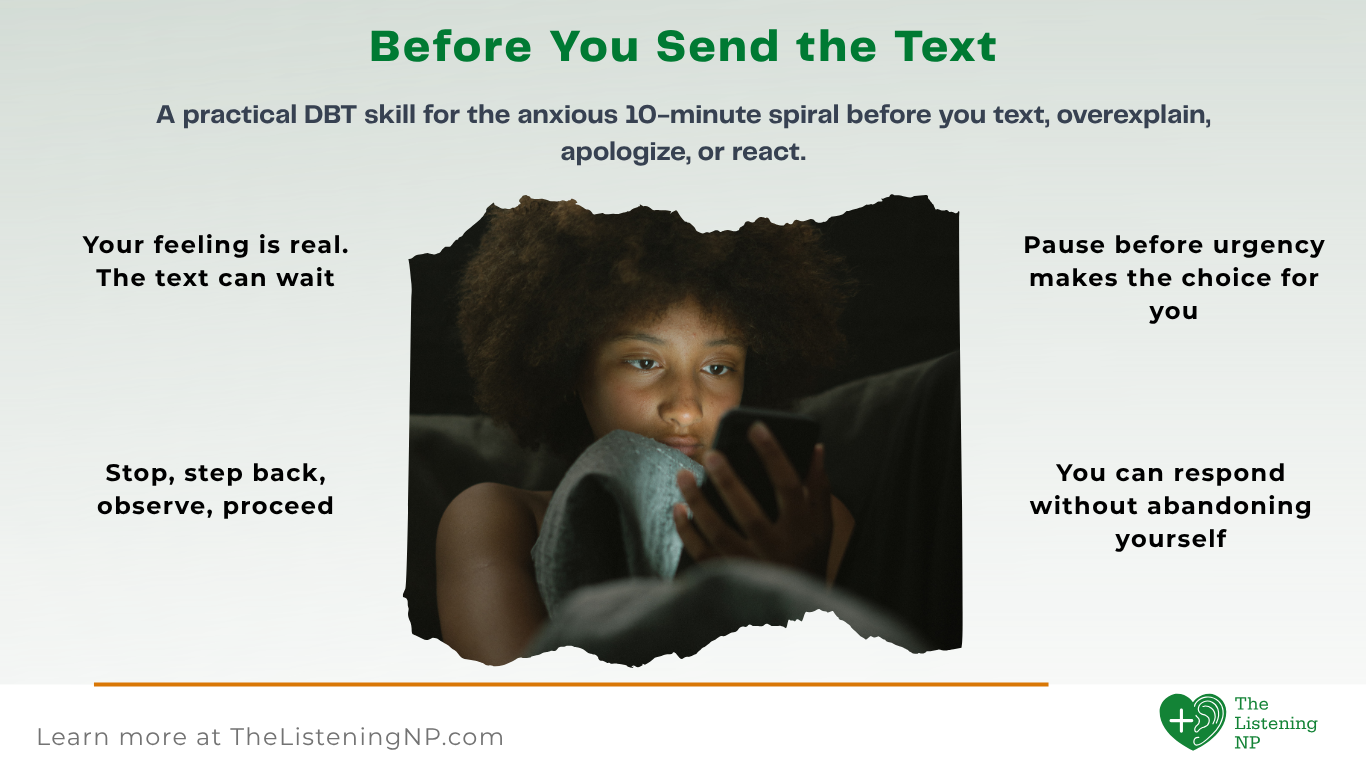
Before You Send the Text
Feeling the urge to text, explain, apologize, or fix everything right now? This DBT-based post teaches the STOP skill for anxiety, rejection sensitivity, and emotional spirals so you can pause, steady yourself, and respond without abandoning yourself.
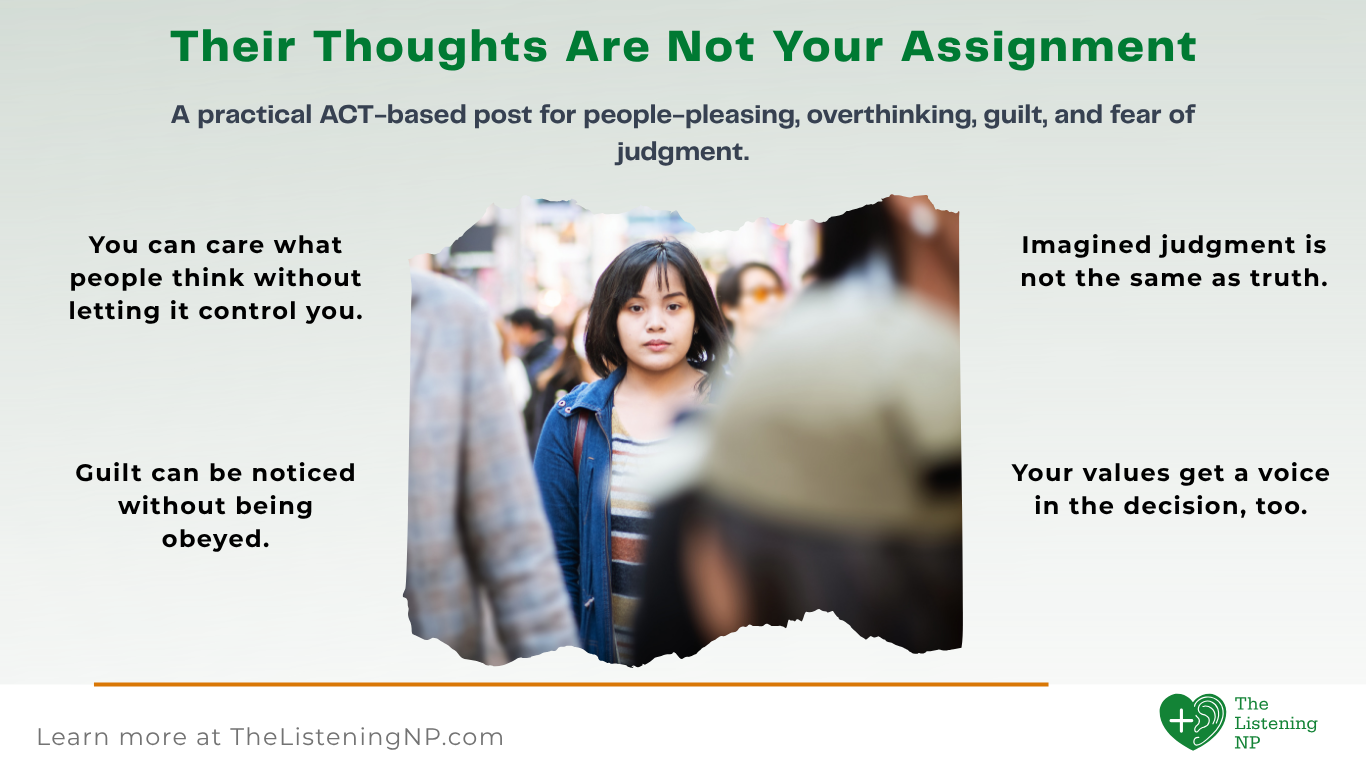
Their thoughts are not your assignment.
Worried about what other people think? Learn an ACT-based way to unhook from imagined judgment, reduce guilt, and make choices from your values instead of fear.
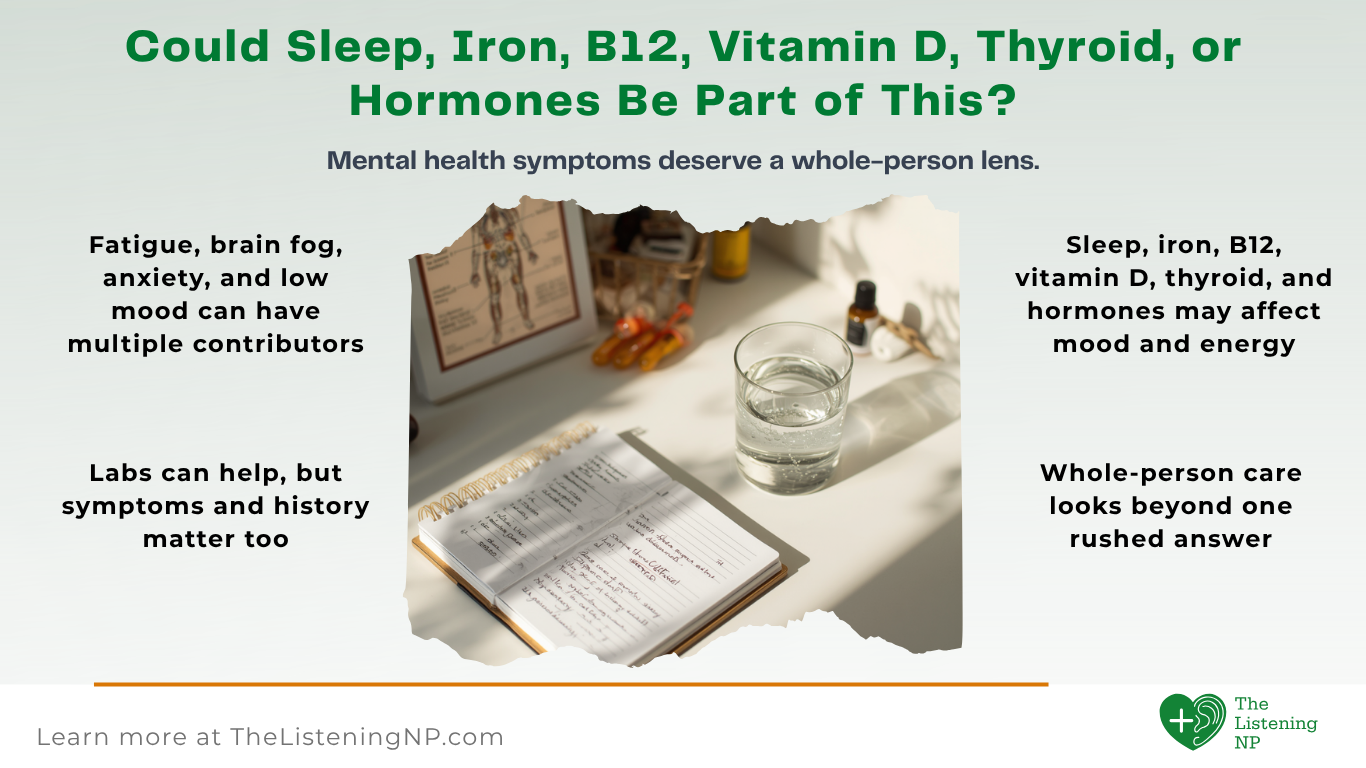
Could low iron, thyroid, or vitamin D be part of the picture? | Beyond The Script
Fatigue, brain fog, low mood, anxiety, and poor focus are not always only stress. Learn how sleep, iron, B12, vitamin D, thyroid, and hormones may affect mental health and energy.
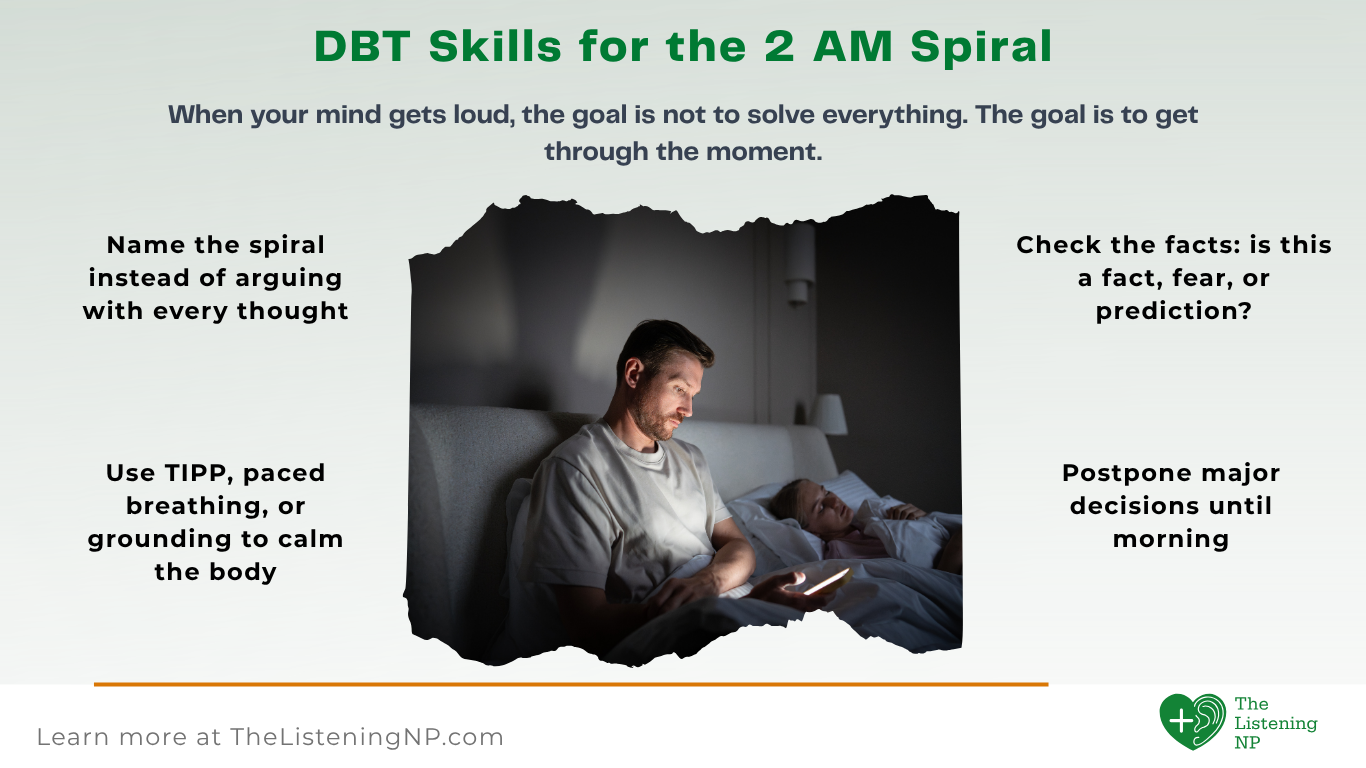
DBT Skills for the 2 AM Spiral | Beyond the Script
The 2 AM spiral can make everything feel urgent, hopeless, and impossible to solve. This blog explains practical DBT skills that can help with late-night anxiety, emotional overwhelm, racing thoughts, and distress tolerance.
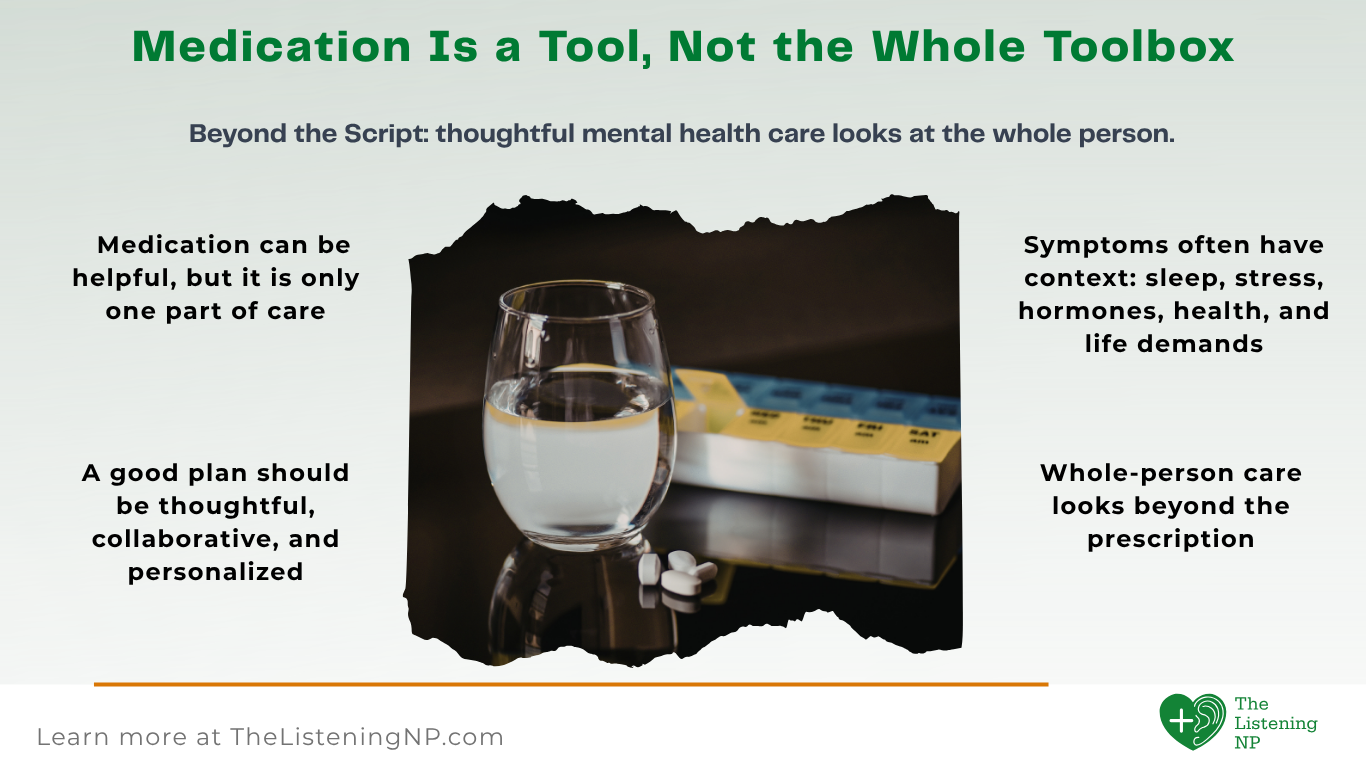
Medication Is a Tool, Not the Whole Toolbox | Beyond the Script
Medication can be helpful, but mental health care often works best when the whole person is considered. This Beyond the Script post explores why medication is one tool among many, and how sleep, stress, hormones, therapy, routines, and lifestyle can all matter.
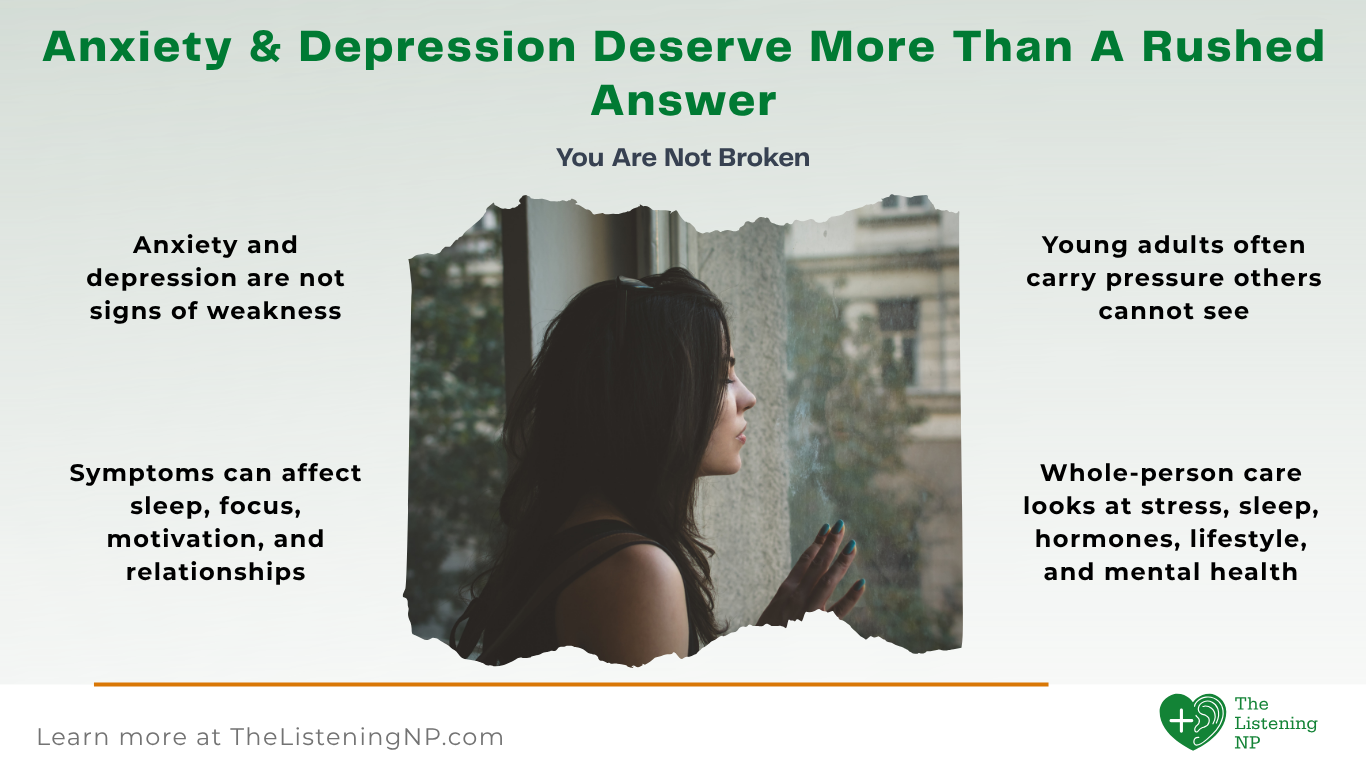
You Are Not Broken: Anxiety and Depression Support for Young Adults
Many young adults feel pressure to have life figured out while quietly struggling with anxiety, depression, burnout, sleep issues, or emotional exhaustion. This blog explains why these symptoms are not character flaws and why thoughtful, whole-person support matters.
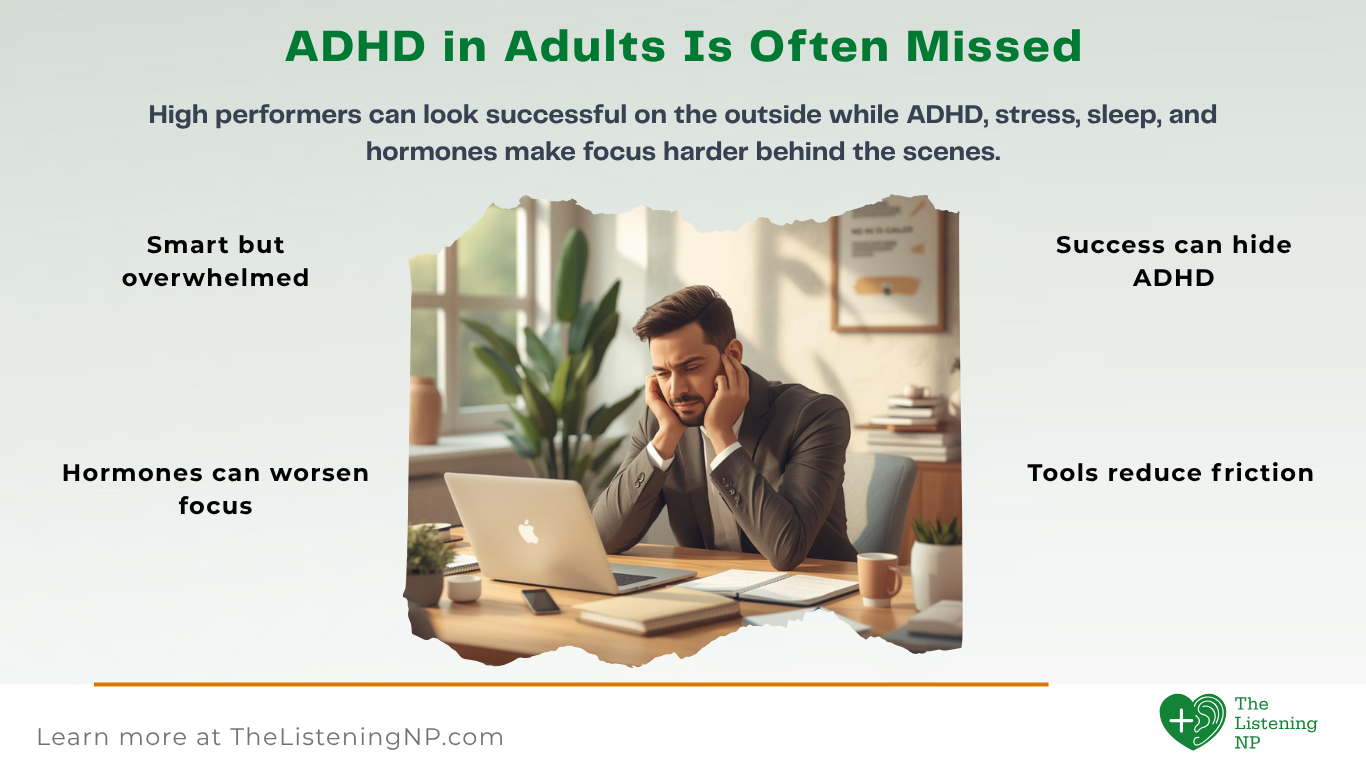
Why ADHD in Adults Is Often Missed, Especially in High Performers
Many adults with ADHD were never disruptive or failing. They were capable, hardworking, and constantly compensating. Hormonal shifts, stress, and poor sleep can worsen focus and emotional regulation.
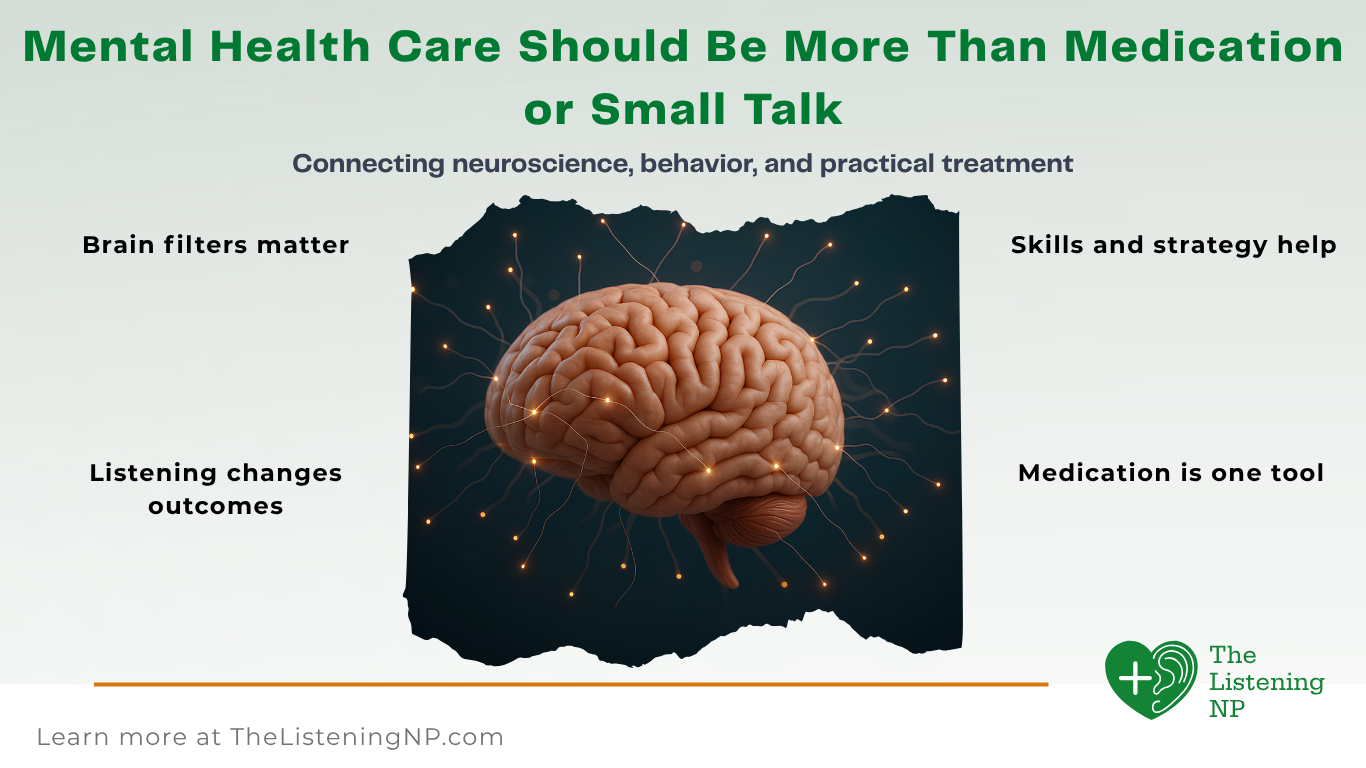
Mental Health Care Should Be More Than Medication or Small Talk
Many people seeking help for anxiety or depression fear two things: being rushed, or being handed medication without real understanding. Mental health care can be more thoughtful than that. Learn how a modern, practical approach combines listening, neuroscience, emotional tools, and whole-person care.
Is This Just Aging… or Is Something Actually Off?
Normal thyroid labs don’t always mean optimal thyroid function. Learn why symptoms like fatigue, brain fog, and weight gain can persist despite “normal” TSH and how a comprehensive thyroid evaluation can help you feel better.
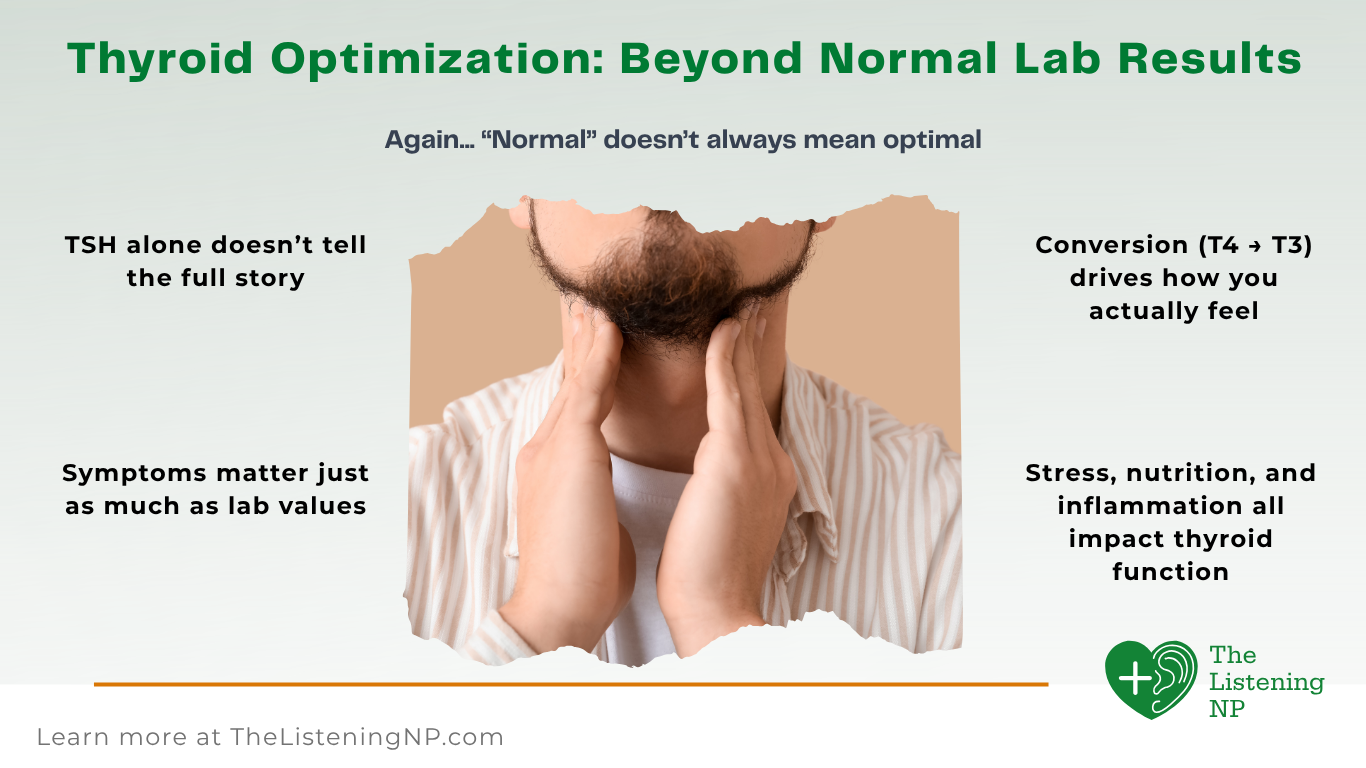
Thyroid Optimization: Beyond "Normal" Lab Results
Normal thyroid labs don’t always mean optimal thyroid function. Learn why symptoms like fatigue, brain fog, and weight gain can persist despite “normal” TSH and how a comprehensive thyroid evaluation can help you feel better.
Why Testosterone Therapy Doesn’t Always Work the Way Men Expect
Many men in Jacksonville start testosterone therapy expecting more energy, better workouts, and clearer focus—but the results aren’t always as straightforward as they hoped. Testosterone doesn’t work alone. Sleep, stress, muscle mass, and overall metabolic health all influence how you actually feel. Here’s what to understand before assuming TRT isn’t working.
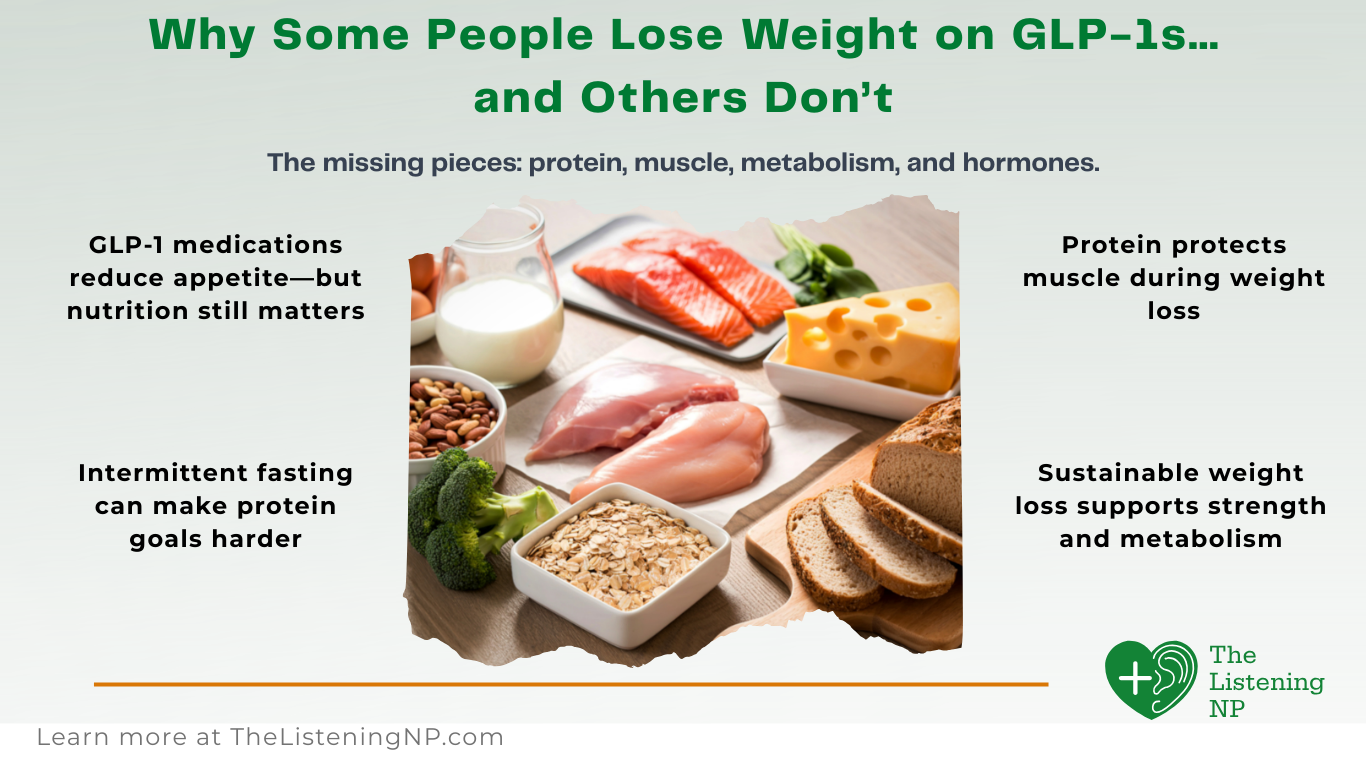
Why Some People Lose Weight on GLP‑1 Medications and Others Don’t
GLP-1 medications help reduce appetite, but weight loss success depends on more than calories alone. Learn why protein, muscle mass, and hormones influence results and how to protect your metabolism during treatment.
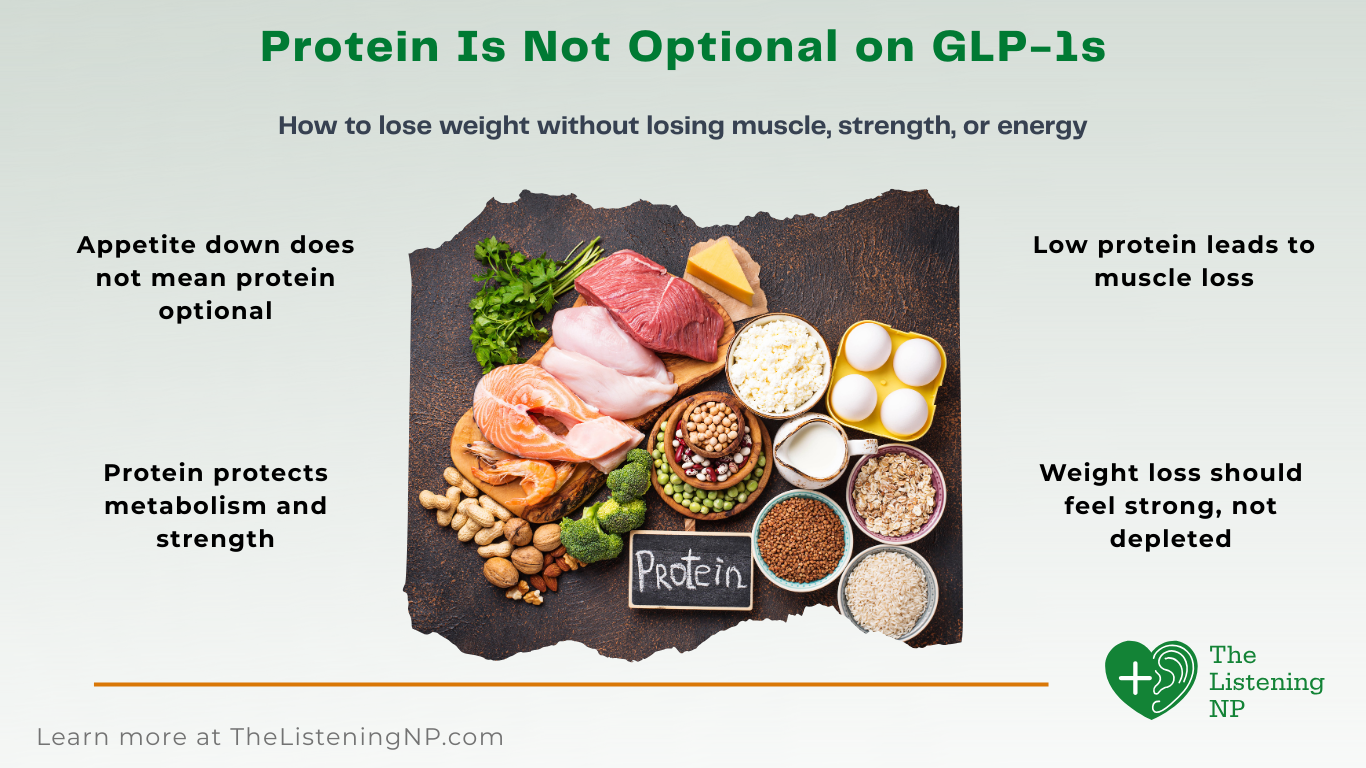
Protein Is Not Optional on GLP-1s: How to Lose Weight Without Losing Strength
GLP-1 medications reduce appetite, but eating too little protein can quietly undermine muscle, energy, and metabolism. Here’s how to lose weight while protecting strength and long-term health.
Why Your Doctor Says Your Hormones Are Normal (And Why You Still Feel Off)
If your doctor says your hormones are normal but you still feel exhausted, foggy, or off, you are not imagining it. Here is why standard testing often misses the full story and what to do next.
When Is It Time to Seriously Consider Testosterone Therapy? A Practical Guide for Men in Their 50s
Most men do not wake up one day deciding they want testosterone therapy. They arrive there slowly, after effort stops matching results. Here is how to recognize when your body may be asking for support and why waiting is not always neutral.
Why You’re Waking Up at 3 A.M. In Your 30s
Frequent 3 a.m. wake ups, fatigue, and back pain in your 30s may be linked to early perimenopause and histamine driven sleep disruption, even when labs look normal.
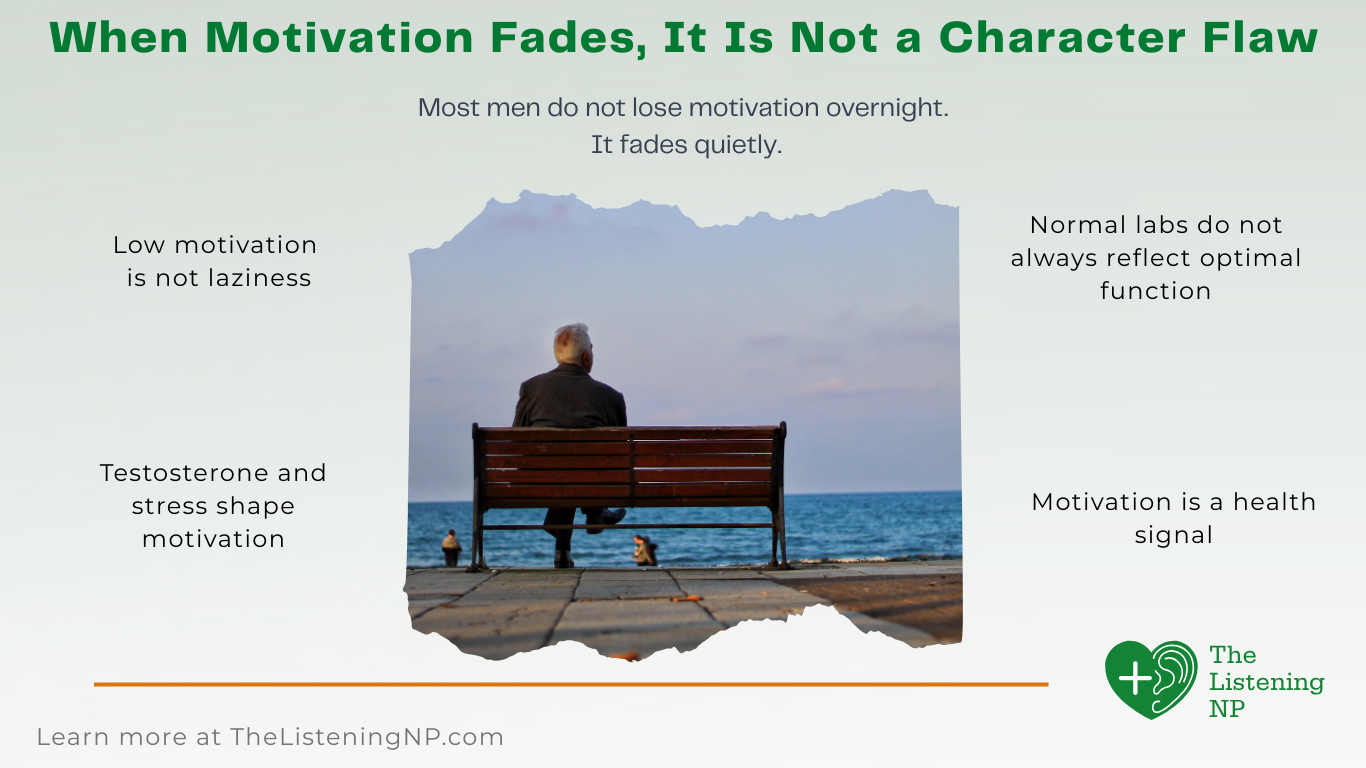
Motivation Is a Health Signal, Not a Personality Trait
Low motivation in men over 40 is often hormonal, not a lack of willpower. Learn how testosterone, thyroid health, and chronic stress affect drive and how personalized care can restore clarity and energy.

When You Feel Like Something Is Wrong but Your Doctor Says You Are Fine
If you feel tired, foggy, or unlike yourself but have been told your labs are normal, you are not imagining it. Many women experience symptoms that standard testing overlooks. Here is how a deeper, more compassionate approach can help.
Why SHBG Matters More Than You Realize in Your Testosterone Journey
If your testosterone labs look normal but you still feel exhausted or unmotivated, SHBG may be the missing piece. High SHBG can limit free testosterone and block the benefits of TRT. Here is what you need to know.
Why Timing Matters: The Health Benefits of Starting MHT Within 10 Years of Menopause
Research shows women starting MHT within 10 years of menopause often experience better symptom relief and improved cognitive, metabolic, and musculoskeletal support. Learn why timing matters and how personalized therapy can help you feel like yourself again.